
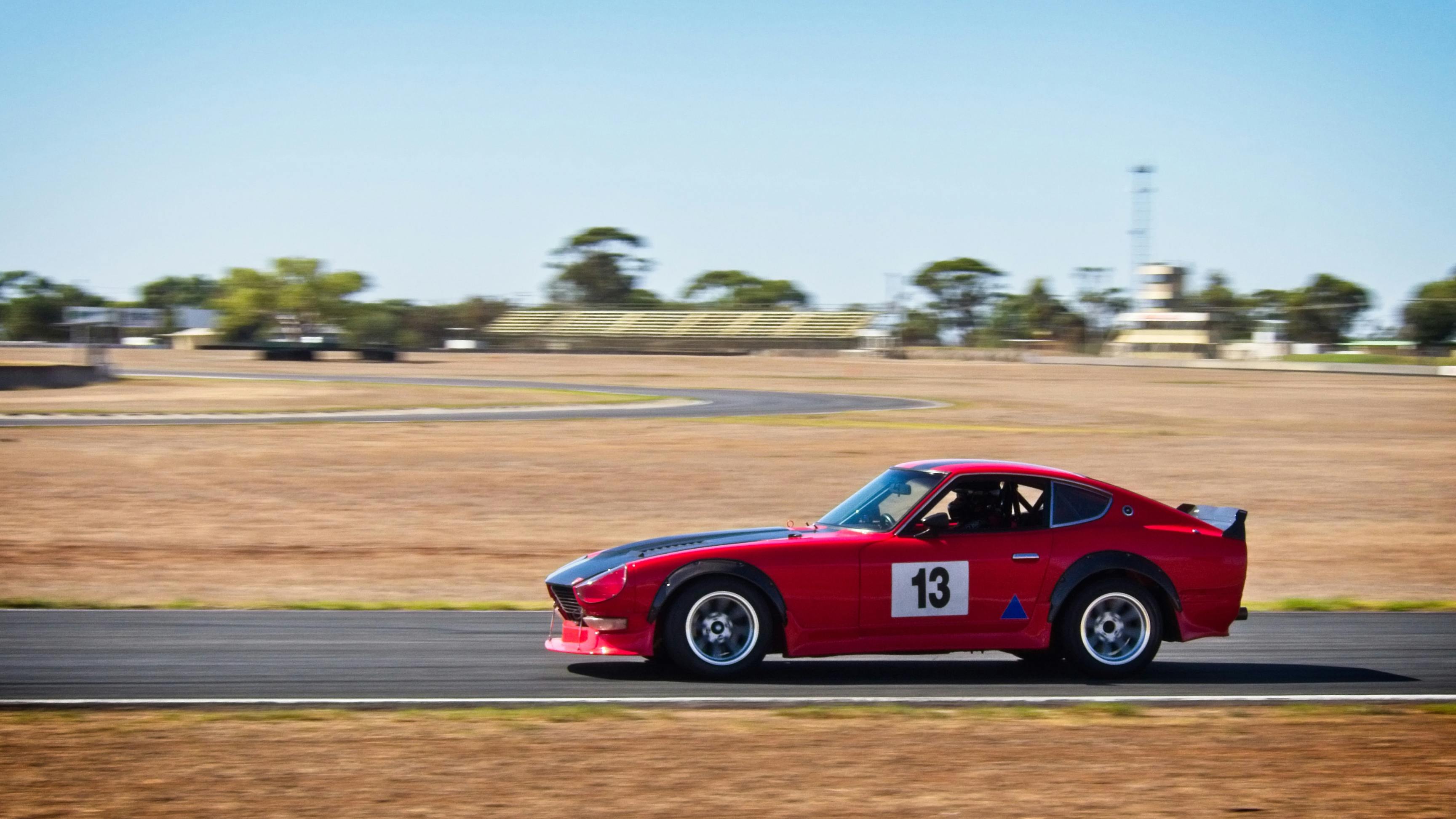
Guide To Your First Track Day
From pre-event prep to post-session review, here's everything you need to know to get the most out of your track day.
By Qualy
Whether you're a first timer or a seasoned veteran, this guide is meant to organize yourself, your gear, and your car prior to the track day. It's important to note that every situation is different. Be sure to do your own homework when it comes to attending a track day.
Pre-Event Prep (Before You Leave Home)
The most important thing with any track day is safety, and that starts with reading the rules. Every organizing body has its own procedures, requirements, and rules. Be sure to read them carefully before you attend the event.
Next, you'll want to make sure your car will pass the tech inspection. Most organizations will check to make sure things like batteries are securely tied down, seats and belts are secure, wheels and bearings are tight, and that the interior has been emptied of all items. Things that will move around while driving don't belong in the car.
Helmet requirements are the next thing you want to check. Most track day organizations will require an SA helmet, even though most autocross organizations allow M as well. Be sure to have the appropriate helmet. Some organizations have rental helmets, but they may be hard to rely on.
Consider insurance if you feel you'd be unable to cover a potential loss. While most track events are safe and without incident, incidents can and do happen. Your normal car insurance will not typically cover any on-track activity.
Fuel planning is easy to overlook. Make sure you'll have a quick source of fuel between sessions if necessary. If you run E85, you may want to plan on bringing your own.
Finally, keep an eye on the weather and plan ahead. Rain and lower temperatures can greatly impact how your car behaves. Make sure you're prepared for what's ahead, especially if it impacts how you set up your car.
Basic Track Car Inspection Checklist
This is by no means the full list of things to check, but will serve as a baseline to catch common issues before taking your car out on the track.
Make sure you've got fresh brake fluid, especially if it's been a while. Flush with a well-known, high-boiling point DOT4 fluid. Check other fluids too — water/coolant, oil level, and other fluids your car may use. I usually flush my diff fluids and transmission fluid once per year. This is overkill for a street car, but the bare minimum for a track car. Engine oil is not just about the amount — ideally, you are running both an oil cooler and a baffled oil pan. Compared to autox, track sees much higher sustained g's, which can force the oil to one side of the pan and starve the pickup, which can cause catastrophic damage to an engine. Most oil pans are not built to withstand track usage, but the minimum you can do is make sure the oil is all the way full.
Brake pads and rotors should be inspected. The pads should have plenty of life left on them, and I would consider bringing a spare set of pads as well. We won't get into the details of what kind of pad you need here, but be sure it is suited for the kinds of temps it will see on the track. Make sure that rotors have no cracks or grooving deep enough to catch a fingernail in. Ventilated rotors are always a good idea for the track.
Tires should be in good condition as well. Make sure they aren't too old and still have tread. Even if a tire still has tread, it may be heat cycled out. Make sure there isn't any damage to the tire itself as well — missing chunks of tread or tears in the material. Along with tires, be sure to check wheels and lug nuts. I always retorque when I arrive at the track, and check the torque between sessions. Give the wheel a good shake (before the session) to make sure the bearings are good.
Finally, make sure everything is securely tied down and all loose items in the interior of the car have been emptied.
What to Bring to the Track
Be sure to bring the essentials — driver's license, helmet, car, tools, and camera. You don't need a racing suit for most orgs, but you will usually need long pants/sleeves. Don't need racing shoes either, just comfortable ones.
Hydration and food are critical. Track days can be demanding, so be sure to bring water and snacks.
I always bring a good set of tools, including most of my ratcheting wrenches, breaker, torque wrench, and tire gauge. I bring ramps if I expect to change the rear bar, and you will need a jack and stands if you are going to do any brake work. Planks of wood may be helpful as well, especially if you are parked on the grass, as the jack may sink before lifting the car.
As mentioned, you will probably want to bring spare fluids and common parts as well.
For your comfort, you'll also want to bring a lawn chair, a good amount of sunscreen, and rain gear depending on the weather.
For those recording laps, bring your camera, mounting solutions, spare batteries, and a wind muffler. Be sure to bring your data acquisition hardware as well, if you've got it.
Cameras, Data, and Recording Laps
Camera placement should prioritize a clear, stable view. Qualy prefers a perspective behind the driver with a clear view through the windshield towards the track. This is helpful for the driver as well, as it can help capture steering and sometimes throttle/brake/clutch inputs as well.
If you have a lap timer app for your phone or hardware, try to make sure it is captured in the video. Our tip is to set up everything to start recording just after getting to the grid, so you can completely remove it from your mind once you get on the track.
On-Track Etiquette
Situational awareness on track is everything. You are almost never alone on the track, so awareness of your surroundings, flags, and conditions helps keep everyone and their cars safe.
Be sure to keep an eye on your mirrors. Fast cars may appear quickly, and it is your responsibility to be aware of them. Be sure to know the organization's policies regarding passing and point-bys. You may be pressured to give a point-by right away, but oftentimes point-bys are only allowed to be given and taken in designated areas — make sure you are in one before giving a point-by. Likewise, if you are given a point-by, make sure you are taking it in a well designated (usually the straights) area.
Before going for a hot lap, make sure you've got some space. I usually alternate for hot/cool laps, so it is especially important for managing your distance with others. If it's getting a little crowded, or you're pointing someone by who you know you will have to pass again when you start the hot lap, consider pulling off into the pits. Most organizations and tracks do a great job of monitoring the track, and they are usually able to release you into a traffic free stretch.
Be predictable in the way you behave on track. This plays a big part in safety — the last thing you want is to crash your car into someone else's, or worse. The primary goal is to always get back home safely.
Your First Laps on Track
Treat the out lap as warm-up for both you and the car. Be sure to mind the blend line as you exit onto the track. You want to bring the tires, brakes, and car up to speed gradually, building pace progressively.
Take the opportunity to note the condition of the track, the asphalt, curbing, and braking reference boards. Begin identifying references or easily identifiable artifacts that you can start to use as you build speed.
Focus on keeping your inputs smooth. Take the long straights as an opportunity to make sure you're not clenching the wheel, take deep breaths, and reset for the next corner.
Going Faster
As you build speed, you want to make sure you're still focusing on the line. As your pace continues to increase, it is likely that your reference points may change. Make small changes incrementally as you go, and continue to maintain smooth inputs.
Be sure to continue watching for flags, especially the checkered flag so you are able to take a lap to cool the car and brakes down naturally. You don't want to miss a flag and cost everyone a couple minutes just for you to exit the track.
Between Sessions
Take the time between sessions to decompress. The first thing I do is adjust tire pressure. Especially after your first sessions, the pressures will be significantly higher — sometimes as much as 10psi higher. Drop them down to the operating target right after you get off the track. Be careful, as the brakes will likely still be very hot. Tire pressures will continue to rise over the sessions as you get faster and push the car harder, but the increase will be less significant between sessions.
Retorque the lug nuts, and do a once over on the car to make sure everything is still secure and safe. You can hydrate, rest, and review video, notes, or data in the meantime.
After the Event
Give the car a post-event inspection before you leave for home, especially if you're driving the car back. Once you're safely home, review your videos and upload onto our platform to get points for your latest track day.
You might be eager to get back out on the track. Plan out your next event and if possible, consider attending a different track for the next event — only your fastest lap per track per cup counts, and attending a different track, even one you're not familiar with, may net you more points total than perfecting/winning at a single track.
Stay safe, and look forward to seeing our drivers out there!
TL;DR
- Read the organizer's rules before the event — every track day is different
- Prep your car for safety first: fresh brake fluid, good pads/rotors, healthy tires, tight wheels, nothing loose
- Make sure you have the right helmet (most orgs require SA-rated)
- Plan fuel and weather ahead of time, especially if you run E85 or expect rain
- Bring the basics: license, helmet, water, food, tools, fluids, and a camera if you're recording laps
- Be predictable and courteous on track: watch mirrors, follow point-by rules, give space
- Build speed gradually and focus on smooth inputs and clean lines
- Manage tire pressures and recheck the car between sessions
- Review your day afterward, upload your laps to Qualy, and start planning the next event